
In recent years, the global packaging and food service industries have been undergoing a major transformation. As governments introduce restrictions on single-use plastics and consumers demand more sustainable products, pulp molded tableware has emerged as one of the most promising alternatives.
Among emerging markets, Nigeria is rapidly gaining attention as a strategic destination for pulp molded tableware manufacturing. With its massive population, expanding food service industry, and growing environmental awareness, Nigeria is becoming a new hotspot for investors looking to enter the eco-friendly packaging sector.

A Massive Population Driving Demand for Disposable Food Packaging
Nigeria is the most populous country in Africa, with a population exceeding 220 million people. Rapid urbanization and economic development are transforming consumption habits, particularly in major cities such as Lagos, Abuja, and Port Harcourt.
The rise of:
- Street food vendors
- Fast food chains
- Food delivery platforms
- Takeaway restaurants
has created a huge demand for disposable food containers, plates, trays, and bowls.
Traditionally, these products have been made from plastic or Styrofoam due to their low cost. However, the environmental impact of these materials is pushing governments and businesses to search for better solutions. As a result, pulp molded tableware made from recycled fiber and agricultural residues is gaining strong momentum.
Growing Restrictions on Single-Use Plastics
Environmental pollution caused by plastic waste has become a serious concern in Nigeria, especially in densely populated urban areas.
In response, several local governments have started implementing policies aimed at reducing plastic pollution. For example, Lagos State has introduced measures to restrict certain types of single-use plastics and foam food containers.
These policies are gradually reshaping the food packaging market. Restaurants, catering companies, and food vendors are actively searching for biodegradable alternatives, creating strong demand for pulp molded products such as:
- Eco-friendly plates
- Fiber bowls
- Takeaway food containers
- Cup trays and food trays
As regulations tighten in the coming years, the demand for sustainable packaging solutions is expected to grow rapidly.
Abundant Raw Materials for Pulp Molding
One of the key advantages of manufacturing pulp molded products in Nigeria is the availability of raw materials.
Pulp molded tableware can be produced using various types of recycled or plant-based fibers, including:
- Waste paper
- Old cartons
- Newspapers
- Agricultural residues
Nigeria generates large quantities of recyclable waste every year. With the proper recycling and pulping systems in place, these materials can be transformed into valuable eco-friendly products.
This creates a circular economy model, where waste materials are converted into sustainable packaging.
Local Manufacturing Reduces Import Dependence
Currently, a significant portion of eco-friendly tableware used in Africa is imported from Asia. However, importing disposable products involves high shipping costs, long delivery times, and customs duties.
By establishing local pulp molded tableware factories in Nigeria, investors can benefit from:
- Lower logistics costs
- Faster delivery to customers
- More competitive pricing
- Greater control over supply chains
Local production also helps support Nigeria’s industrial development and job creation.
Cost Advantages for Manufacturing
Nigeria offers several cost advantages that make it attractive for manufacturing investment:
Competitive labor costs
Manufacturing wages are generally lower than in many developed countries.
Growing industrial infrastructure
Industrial zones and manufacturing parks are expanding across the country.
Large domestic market
Unlike many smaller African markets, Nigeria alone provides a huge internal demand.
These factors make it possible for pulp molded tableware manufacturers to achieve strong profitability.
Advanced Pulp Molding Technology Enables High-Quality Production
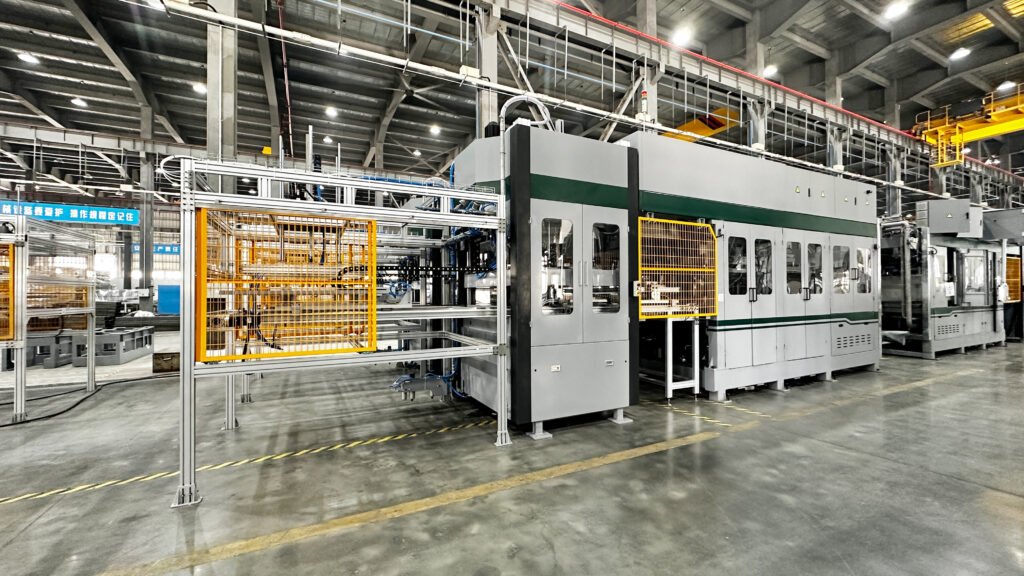
Modern pulp molding technology has advanced significantly in recent years. Automated pulp thermoforming production lines can produce high-quality biodegradable tableware with excellent strength and smooth surface finishes.
A typical pulp molded tableware production process includes:
- Waste paper pulping
- Fiber molding
- Drying
- Hot pressing and shaping
- Trimming and packaging
Equipment manufacturers such as HGHY provide complete automated production lines capable of producing:
- Plates
- Bowls
- Lunch boxes
- Food trays
- Cup carriers
These advanced systems ensure high productivity, stable product quality, and energy-efficient operation.
Export Opportunities Across West Africa
Nigeria’s strategic location also provides strong export potential. As the largest economy in West Africa, Nigeria serves as a regional trade hub.
A pulp molded tableware factory located in Nigeria can supply not only the domestic market but also neighboring countries such as:
- Ghana
- Cameroon
- Benin
- Ivory Coast
Demand for eco-friendly packaging is growing across the entire region, creating opportunities for regional exports.
Early Investors Will Gain a Competitive Advantage
The eco-friendly packaging industry in Nigeria is still at an early stage. Compared with more mature markets in Europe and Asia, competition remains relatively limited.
For investors, this presents a rare opportunity to enter the market early and establish a strong brand presence before the industry becomes crowded.
Businesses that invest in pulp molded tableware manufacturing today are likely to benefit from:
- Rapid market growth
- Expanding government support for sustainability
- Increasing consumer awareness of environmental protection
Conclusion
Nigeria’s combination of huge population, growing food service sector, increasing environmental regulation, and abundant recyclable materials makes it one of the most promising emerging markets for pulp molded tableware manufacturing.
As the global shift toward sustainable packaging accelerates, eco-friendly fiber tableware will become an essential part of the food service industry.
For entrepreneurs and investors seeking new opportunities in green manufacturing, Nigeria may well become the next hotspot for pulp molded tableware production.