
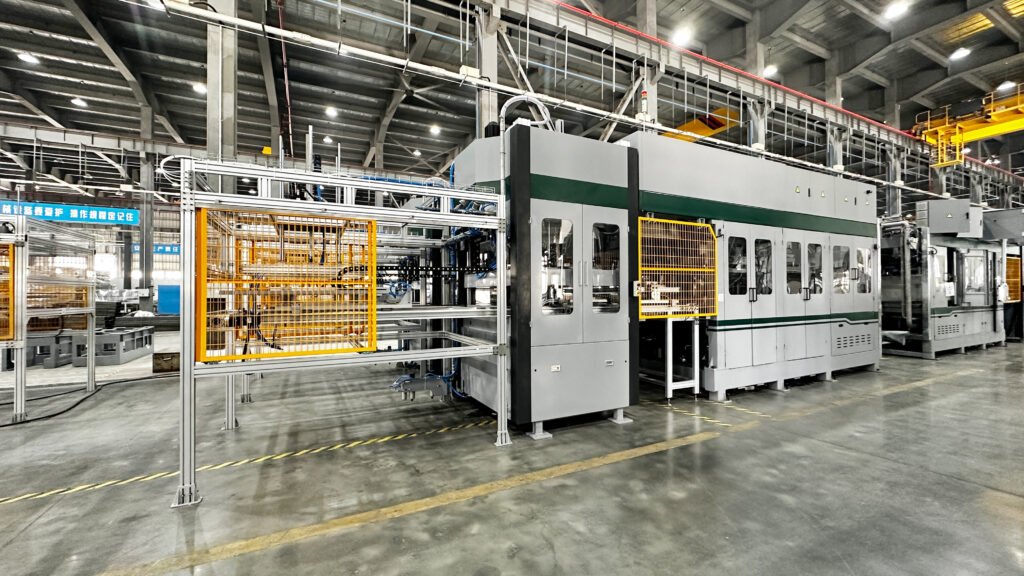
Pulp molding tableware machines play a vital role in producing eco-friendly disposable products such as plates, bowls, clamshell containers, trays, and cup lids. As highlighted in The Complete Guide to Pulp Molding Tableware Machines, these production systems combine pulping, forming, drying, hot pressing, trimming, and packaging into a continuous manufacturing workflow. While modern pulp molding lines are highly automated and efficient, operational challenges can still occur during daily production.
Understanding common equipment problems and knowing how to troubleshoot them effectively can significantly improve product quality, reduce downtime, and extend machine lifespan. This guide explains the most frequent issues encountered in pulp molding tableware production and provides practical solutions to help manufacturers maintain stable and high-quality output.
1. Uneven Product Thickness
Problem Description
One of the most common quality issues in molded pulp tableware is uneven thickness distribution. This defect can cause weak structural strength, poor product appearance, and inconsistent weight.
Possible Causes
1. Inconsistent pulp concentration
If the slurry consistency fluctuates, the fibers may not deposit evenly on the mold surface.
2. Uneven vacuum pressure
Insufficient or unstable vacuum suction prevents proper fiber formation.
3. Mold clogging or contamination
Blocked mesh holes restrict water drainage, resulting in uneven fiber layering.
4. Incorrect forming time
Short forming cycles may prevent sufficient fiber accumulation.
Troubleshooting Solutions
- Maintain stable pulp concentration, typically between 1%–3% depending on product design.
- Regularly inspect vacuum pumps, pipelines, and valves to ensure stable suction pressure.
- Clean forming molds and mesh screens routinely using high-pressure water or chemical cleaning methods.
- Adjust forming cycle time based on product thickness requirements.

2. Surface Roughness or Poor Product Appearance
Problem Description
Finished tableware products may show rough surfaces, fiber lumps, or visible defects, which negatively affect product market acceptance.
Possible Causes
- Low-quality raw materials containing impurities
- Poor pulp refining process
- Damaged or worn mold surfaces
- Insufficient hot pressing pressure or temperature
Troubleshooting Solutions
Improve Raw Material Quality
Using high-quality waste paper, bagasse, bamboo fiber, or other plant fibers significantly improves product smoothness. This is strongly emphasized in the main guide when discussing raw material selection.
Optimize Refining Process
Proper beating and fiber dispersion improve fiber bonding and surface quality.
Check Mold Surface Treatment
Polished or coated molds help produce smoother products. Damaged molds should be repaired or replaced promptly.
Adjust Hot Press Parameters
Increase temperature and pressure gradually to achieve better surface densification.
3. Product Deformation or Warping
Problem Description
Warping often occurs after drying or hot pressing, leading to poor stacking performance and packaging difficulties.
Possible Causes
- Uneven drying temperature distribution
- Excess moisture remaining inside the product
- Incorrect hot press cooling process
- Improper mold alignment
Troubleshooting Solutions
- Ensure uniform airflow and temperature control in the drying system.
- Optimize moisture content before hot pressing, typically maintaining 15%–20% moisture prior to thermoforming.
- Adjust cooling time after hot pressing to stabilize product shape.
- Verify mold alignment and parallelism regularly.
4. Cracking or Structural Weakness
Problem Description
Cracks or fragile edges reduce product durability and customer satisfaction.
Possible Causes
- Excessively low moisture during hot pressing
- Insufficient fiber bonding
- Excessive pressing temperature
- Poor fiber blending ratio
Troubleshooting Solutions
- Maintain proper moisture levels before pressing to avoid fiber brittleness.
- Adjust pulp formulation to improve fiber bonding strength.
- Reduce pressing temperature or shorten pressing time when overheating occurs.
- Incorporate longer plant fibers when additional structural reinforcement is required.
5. Mold Sticking or Difficult Demolding
Problem Description
Products sticking to molds can slow production speed and increase defect rates.
Possible Causes
- Improper mold surface coating
- Excess pulp adhesion
- Insufficient mold release design
- Incorrect vacuum or blowing pressure during demolding
Troubleshooting Solutions
- Apply specialized mold coatings such as Teflon or ceramic treatments.
- Optimize pulp slurry additives to reduce adhesion.
- Adjust vacuum and air blowing pressure for smooth product release.
- Inspect mold venting design to improve airflow during demolding.
6. Excessive Product Moisture After Drying
Problem Description
High moisture content may cause microbial growth, deformation, or poor hot pressing results.
Possible Causes
- Inefficient drying equipment
- Low drying temperature
- Short drying time
- Air circulation problems inside drying chambers
Troubleshooting Solutions
- Increase drying temperature while avoiding overheating.
- Extend drying duration for thicker products.
- Improve air circulation using optimized fan placement.
- Inspect heating systems such as natural gas, thermal oil, steam, or electric heating.
7. Vacuum System Failure
Problem Description
Vacuum systems are essential for pulp forming. Failure can cause incomplete forming and high rejection rates.
Possible Causes
- Vacuum pump wear or damage
- Air leakage in pipelines
- Blocked filters or separators
- Insufficient water ring vacuum pump supply
Troubleshooting Solutions
- Conduct routine maintenance on vacuum pumps.
- Check pipeline sealing and replace damaged gaskets.
- Clean or replace vacuum filters regularly.
- Monitor cooling water supply for vacuum pump operation.
8. Hot Press Temperature Instability
Problem Description
Temperature fluctuations during thermoforming affect product strength, surface quality, and dimensional accuracy.
Possible Causes
- Malfunctioning temperature sensors
- Heating element damage
- Poor thermal oil or steam circulation
- Control system calibration errors
Troubleshooting Solutions
- Calibrate temperature sensors and controllers periodically.
- Inspect heating elements and replace damaged components.
- Maintain stable heating medium circulation.
- Upgrade to intelligent PLC temperature control systems if necessary.
9. Trimming and Cutting Defects
Problem Description
Rough edges or inaccurate cutting reduces product appearance and may cause stacking problems.
Possible Causes
- Worn cutting knives or trimming dies
- Incorrect cutting pressure
- Poor positioning during trimming
- Mechanical misalignment
Troubleshooting Solutions
- Replace or sharpen trimming blades regularly.
- Adjust cutting pressure according to product thickness.
- Ensure precise product positioning in automatic trimming systems.
- Perform routine mechanical alignment checks.
10. Low Production Efficiency
Problem Description
Production speed lower than design capacity directly impacts profitability.
Possible Causes
- Improper synchronization between forming, drying, and pressing sections
- Operator skill limitations
- Equipment aging or wear
- Inefficient automation control
Troubleshooting Solutions
- Optimize cycle timing across the entire production line.
- Provide regular operator training.
- Upgrade aging mechanical components.
- Implement smart automation and monitoring systems.
Preventive Maintenance Strategies
As discussed in The Complete Guide to Pulp Molding Tableware Machines, preventive maintenance is essential for stable long-term operation. Recommended maintenance practices include:
- Daily inspection of molds, vacuum systems, and pipelines
- Regular cleaning of pulp tanks and forming molds
- Scheduled lubrication of mechanical moving parts
- Monitoring of temperature, pressure, and moisture parameters
- Periodic replacement of worn components
Preventive maintenance not only reduces unexpected failures but also ensures consistent product quality and extended equipment service life.
Conclusion
Pulp molding tableware machines are advanced manufacturing systems that combine mechanical, thermal, hydraulic, and automation technologies. Although production challenges such as uneven thickness, deformation, mold sticking, and vacuum instability may occur, most problems can be resolved through proper process optimization, equipment maintenance, and operator training.
By understanding these common issues and applying effective troubleshooting methods, manufacturers can significantly improve productivity, reduce operational costs, and produce high-quality biodegradable tableware products. When integrated with the knowledge provided in The Complete Guide to Pulp Molding Tableware Machines, these troubleshooting strategies help businesses build efficient, reliable, and profitable pulp molding production operations.